
Types of Bike Lanes
-
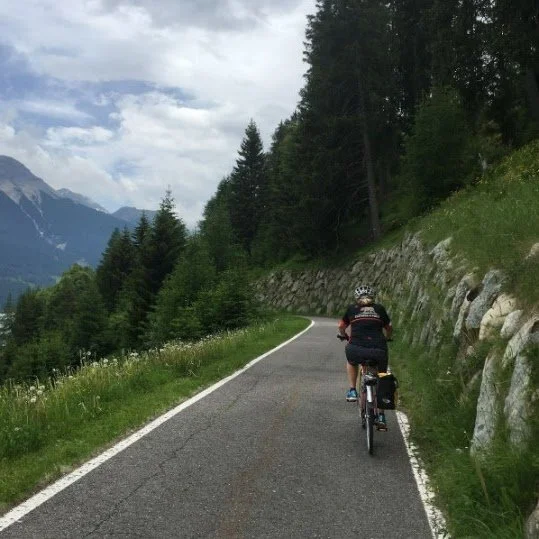
Class 1 Bike Lane
Dedicated bike paths (or "multi-use" or "shared-use" paths) for exclusive by bicyclists and pedestrians. Class 1 bike paths come closest to making cycling safe for people of all ages and abilities.
-
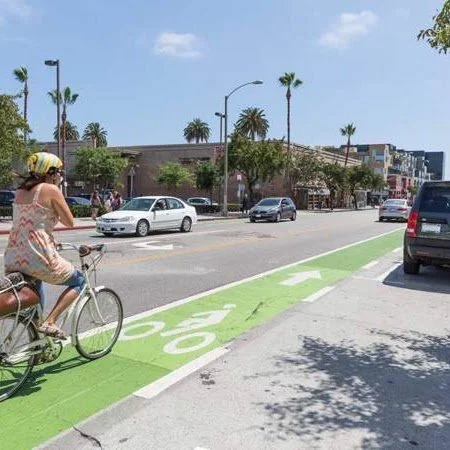
Class 2 Bike Lane
Bike lanes along streets and marked only by striping and often by signage; and -- very occasionally -- by green paint in the bike lane. These are unsatisfactory for all-ages-and-abilities, as bicyclists can be exposed to fast-moving vehicles on their left, and unexpected car door openings on their right.
-
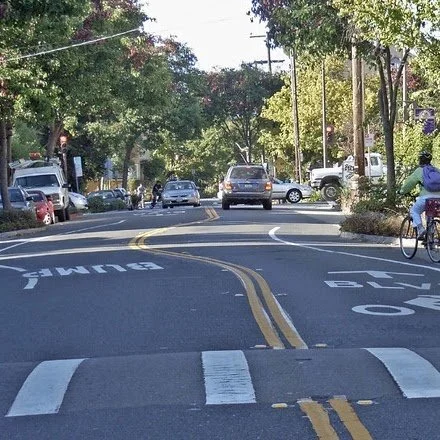
Class 3 Bike Lane
So-called"bike boulevards," are ordinary streets in which bicycles share the roadway with vehicles. Bike boulevards are typically marked only by sharrows and signage, sometimes with the addition of speed bumps. NOTE: Sharrow-marked routes are NOT considered safe “all ages and abilities” (i.e. we wouldn’t let our 8-year old ride to school on one). They are being replaced by safer alternatives.
-
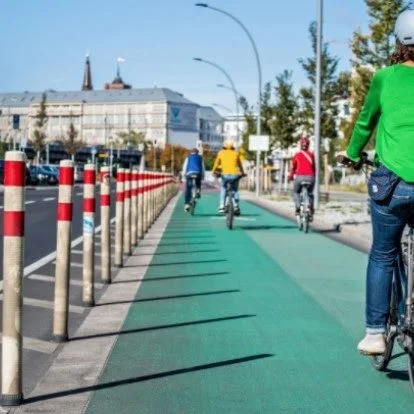
Class 4 Bike Lane
Separated bike lanes, sometimes referred to as "cycle tracks," are for the exclusive use of bicycles (and similar wheeled devices). Separated bike lanes come in many varieties. In order of safety: barrier-protected bike lanes are separated from traffic by physical features that have a vertical dimension (such as bollards, planters, etc.); parking-protected bike lanes are separated from traffic by parked cars or parking spaces. buffered bike lanes are separated from traffic by a wider painted margin.