
Traffic Calming Features
Safe streets are for everyone — and traffic calming features help make sure they stay that way. Things like curb extensions, chicanes, and roundabouts are designed to gently encourage drivers to slow down, creating a safer, more comfortable environment for people walking, cycling, or simply getting around. When traffic moves at a more human pace, everyone benefits: crossings become less daunting, cyclists feel less pressured, and neighborhoods become more pleasant places to spend time. These aren't just road design details — they're small but meaningful changes that make a real difference to people's daily lives.
-
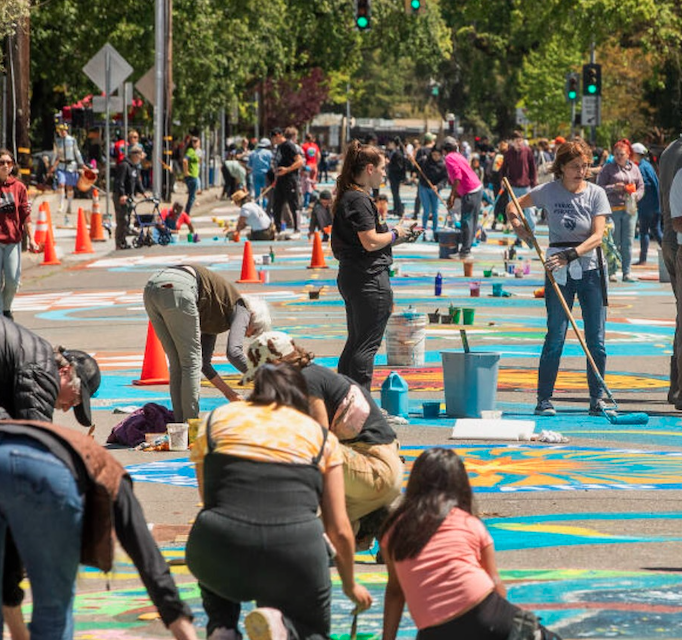
Asphalt Art
Painting of the roadway surfaces, typically done by the local community, results in reduced vehicle speeds.
-
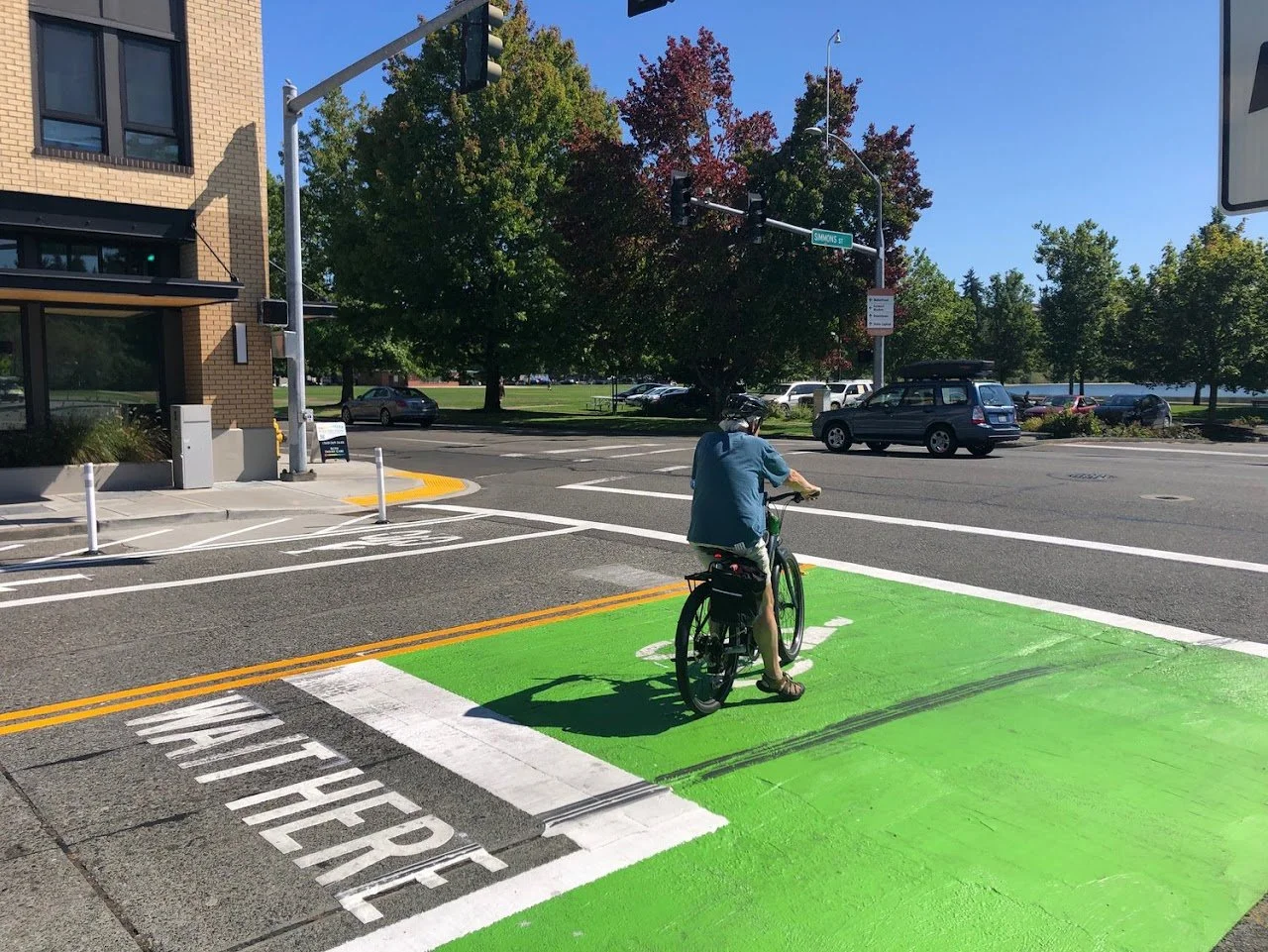
Bicycle Box
An extension to a bike lane providing designated space for bicyclists in front of vehicles while waiting for a green light to make a left turn.
-
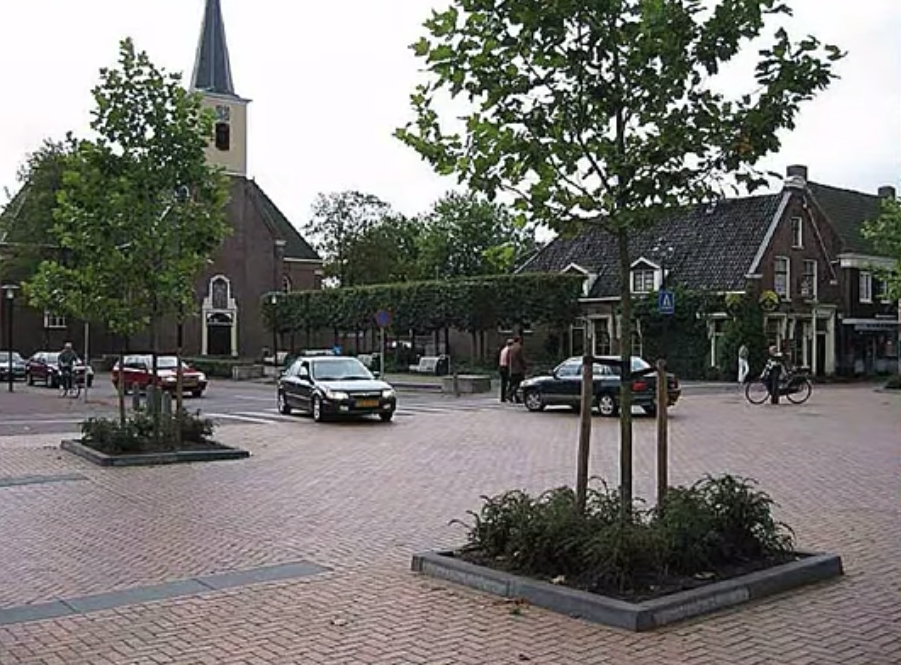
Changes in Pavement Types
Similar to the effect of Asphalt Art, variations in roadway surfaces put drivers on alert and result in reduced vehicle speeds.
-
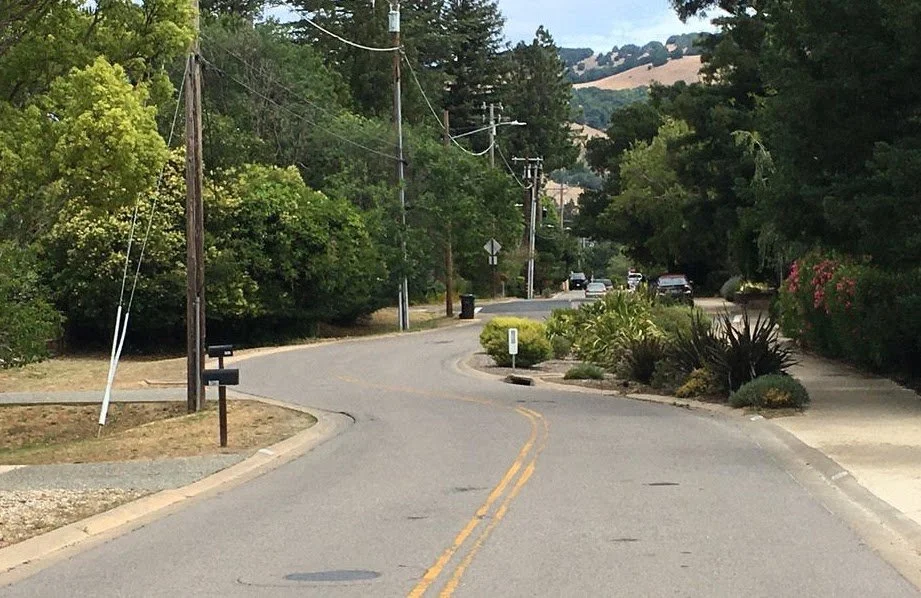
Chicanes
When the roadway ahead is not clearly visible, drivers tend to drive more slowly. Chicanes are intentional wiggles in an otherwise straight roadway. The wiggles are perfect places to plant trees or locate a community gathering place.
-
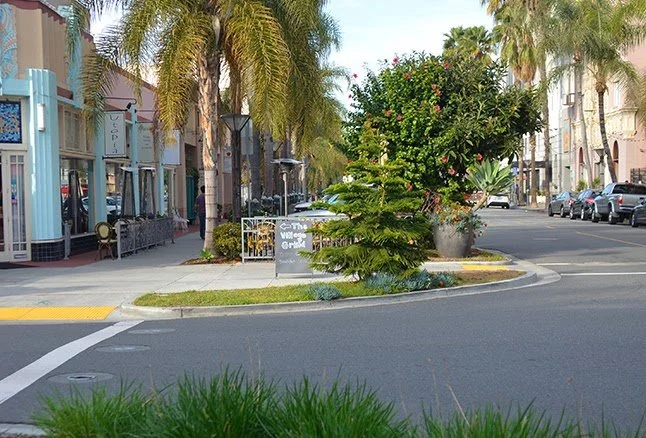
Corner Bulb-Outs
A narrowing of the roadway at intersections that reduces the crossing distance for pedestrians and reduces the turning radius, thereby reducing vehicle speeds. Mid-block crosswalks can be treated in a similar way.
-
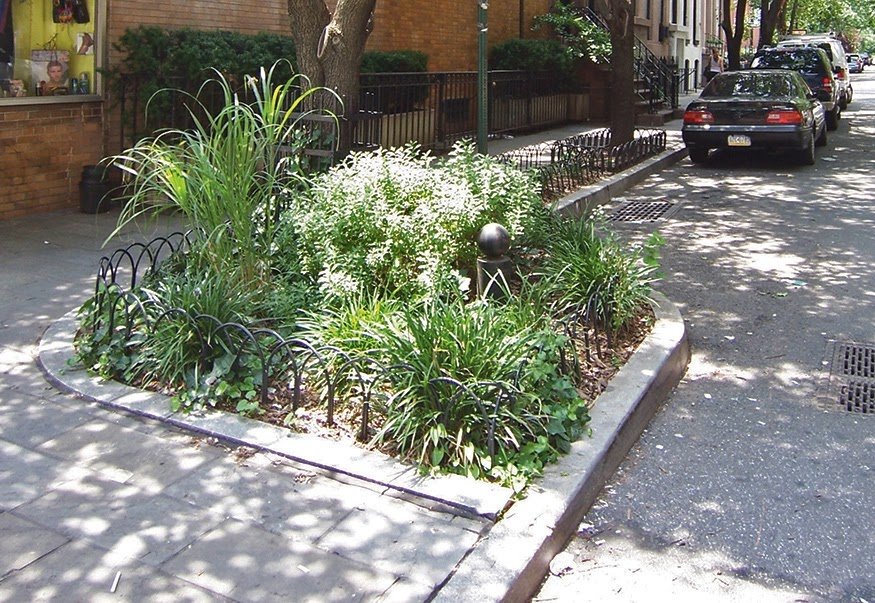
Curb Extensions
Narrow the roadway visually and physically, which creates shorter, safer crossings for pedestrians and makes space available for street furniture, benches, plantings, and street trees. A curb extension can be used as a “gateway” treatment to alert motorists that they are entering a slower zone or non-street area.
-
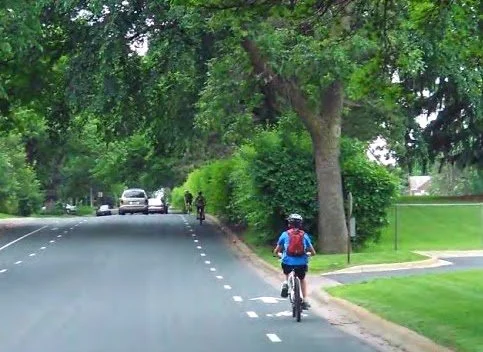
Edge/Advisory Lane
A narrow two-way vehicle traffic lane that is striped only at the outside edges. Outside the advisory lane are edge lanes for bicyclists where motorists may pass other vehicles after yielding to non-motorized road users.
-
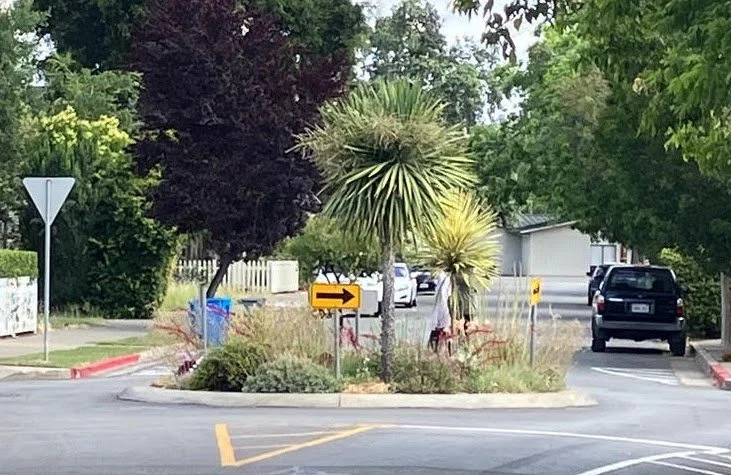
Mini-Roundabout
A small, raised island in the center of a residential intersection for reduction of traffic speeds. Like their larger cousins, these are safer, quieter, less polluting and allow continuous movement of traffic.
-
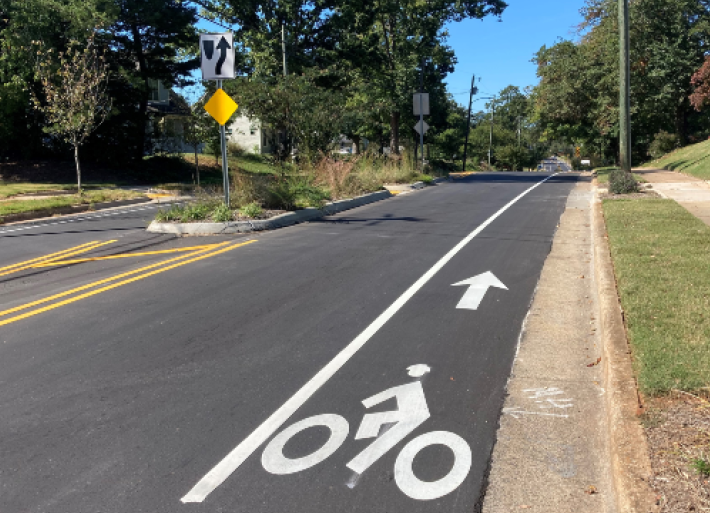
Narrow Travel Lanes
In the past, wide travel lanes were thought to increase safety. Recent studies show that narrower travel lanes result in reduced vehicle speeds and fewer collisions. On our collector streets and arterials, 10 feet is generally adequate. The recent street improvements on B Street in downtown Petaluma feature 10-foot travel lanes. 10 feet is plenty.
-
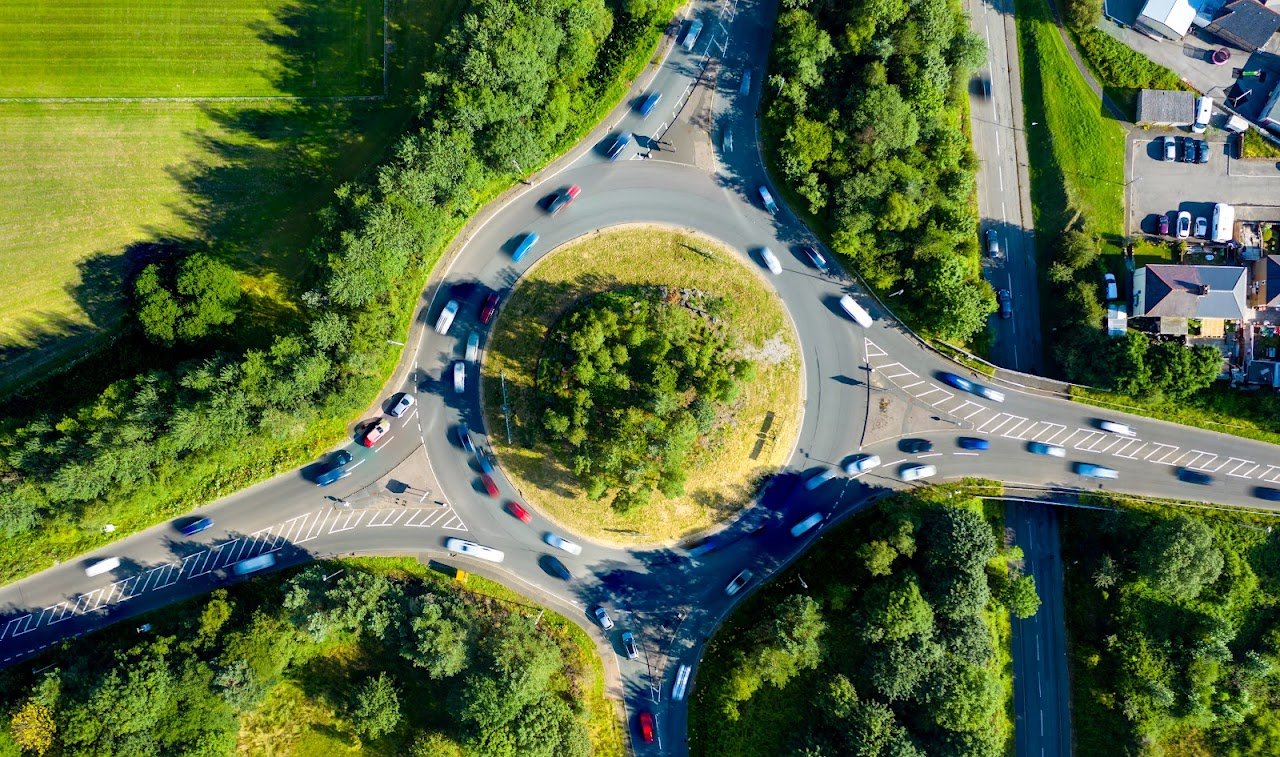
Roundabouts or Traffic Circles
They move traffic more steadily and smoothly than intersections with timed traffic lights. They continue to function during power outages. Their smaller cousins are mini-roundabouts.
-
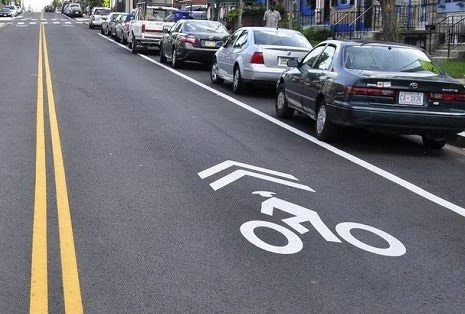
Sharrows
Shared lane markings that alert motorists to be aware of bicyclists traveling on the street.
-
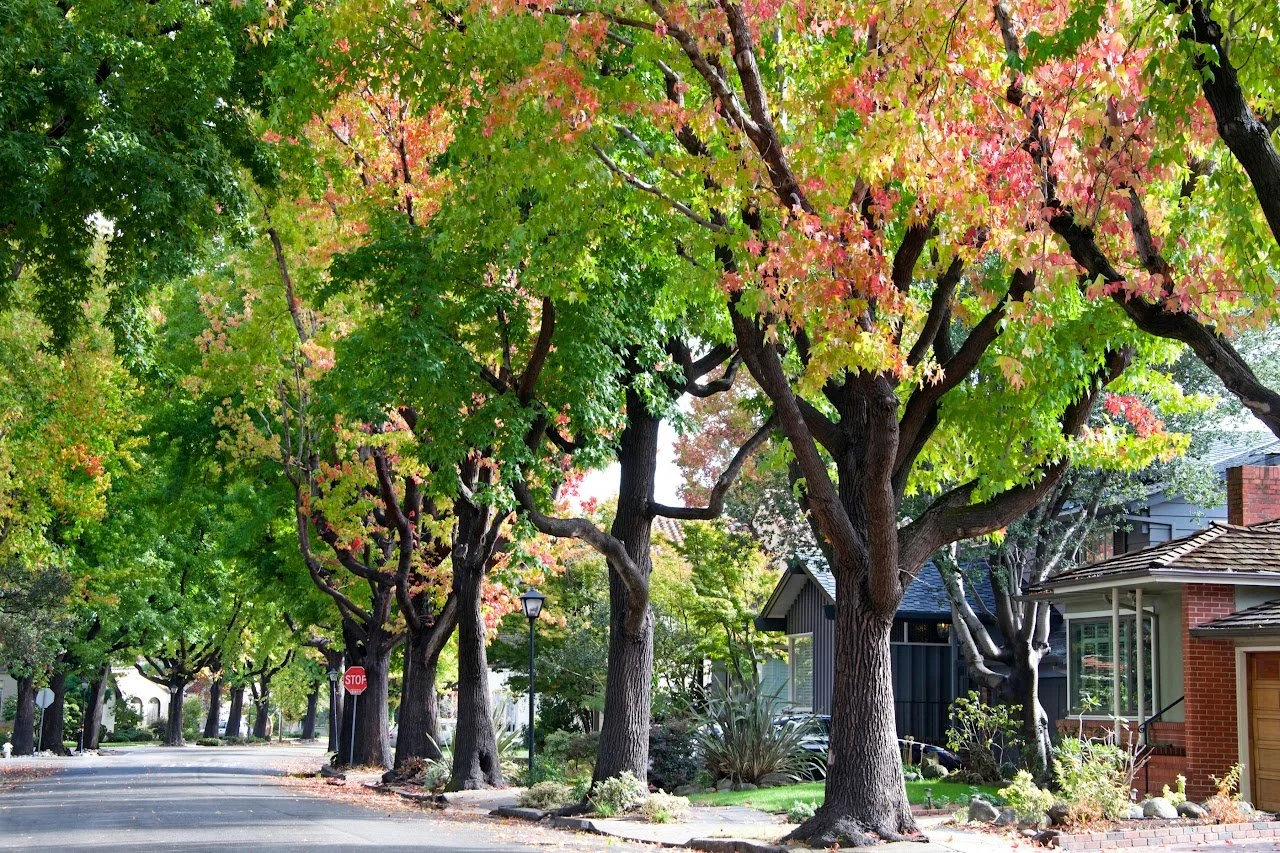
Street Trees
Motorists perceive tree-lined streets to be narrower, and therefore drive more slowly. Plus these same trees improve air quality, provide shade, and enhance well-being.
-
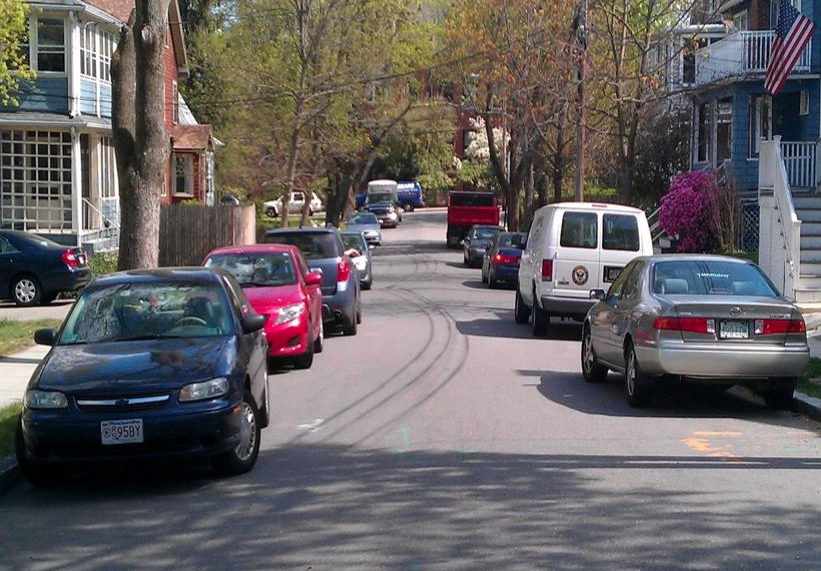
Yield Streets
Low-volume, low-speed (mostly) residential streets where overall traffic lane width does not allow two vehicles to pass. Vehicle pullouts are provided so that vehicles can easily pull to the side and yield to oncoming vehicles. It is the physical configuration of the roadway, not the posted speed limit, that keeps traffic speeds low (less than 15 mph) and keeps the streets safe. [Source:Urban Street Design Guide, National Association of City Transportation Officials]